Neuroengineering Grad School Tips

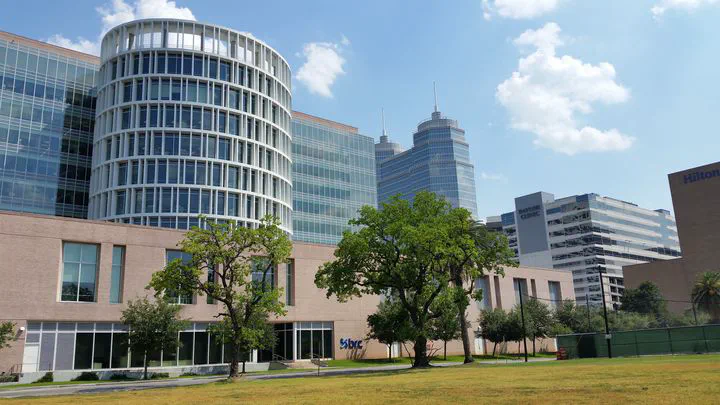 BioScience Research Collaborative, Rice University
Are you interested in research in neural interfaces? Not sure whether to apply as to BME, Neuroscience, or ECE departments? Not sure where your career path falls somewhere between big pharma/medical device companies, biotech startups, and academia? At some point or another I asked myself all of these questions and hoped to write a little bit about my experience because Reddit suggested other people experience similar uncertainties.
Some Personal Context
I did my undergrad in ECE and an M.Eng in CS at Cornell; I wasn’t an outstanding student during my PhD applications (my GPA hovered around a 3.3 for undergrad, 3.9 for my M.Eng). I’m really not sure if my short grad degree offset my undergrad, but maybe it showed that I can handle graduate coursework, which, in my experience, has been more lenient in grading. It’s likely that different admissions committees viewed these things with different perspectives, though my friends (who were certainly better students than me) got into prestigious programs. I did undergrad research throughout undergrad at one lab, and also did several research-based projects as part of a project team, which is basically an undergrad-led club for building cool things. I wasn’t sure I wanted to pursue a PhD right after graduating (I liked research, but didn’t feel I had found a topic I’d want to pursue in academia), so I opted for summer internships over summer research experiences. In my last year or so at Cornell, I got more interested in neuroscience and neurotech and decided to try to work at a biotech startup to get a flavor of the field.
What I Would’ve Done Differently in Undergrad
My career path wasn’t a direct path to research, which I’m cool with because my industry experiences definitely shaped my research goals. However, if I had a time machine I would probably have gone back and tweaked a few things:
Find ways to share what you’re working on in undergrad. Paper authorship of course is amazing but posters, talks, conferences or even just chatting with people are really valuable too. I realized way later than I should have that research is a pretty social endeavor especially in a field like neuroengineering. Scientific communication is a great skill to develop for anyone whether you end up pursuing a PhD or not, because you’re honing the skill to share complex ideas and motivate technical impacts of your work. My mindset used to be that I didn’t know enough or didn’t achieve a perfect result so it’s not worth sharing yet, but now I think science is much more a constant cycle of self-driven critical thinking and community-based feedback.
Breadth is great, but don’t stretch yourself too thin. I tried exploring a lot of things and I learned a lot, but in retrospect I wish I had avoided some harder, “more interesting” coursework or said no to some (re: two research commitments at once) so I could really build on a few things.
Don’t compare yourself to other people! I struggle with this myself still, but unless you’re the undergrad that’s absolutely killing it, it can be demoralizing to look at other people’s accomplishments. Around professors or seniors, it can feel like you’re incapable of contributing if others are smarter, that your scientific opinion is wrong, that you just don’t know enough. When I experience this, I try to block those thoughts and just ask questions. I’ve found setting myself goals of asking questions or daring myself to communicate has helped me get over the hump here sometimes, though I’m still far from being comfortable at this. No matter how smart everyone is, one advantage of asking dumb questions is that asking a ‘dumb’ question early saves the time you’d waste going down the wrong path.
Industry vs. Academia
As circuitous as my path has been, I’d say if you’re thinking about a PhD but not sure, you shouldn’t do it. I say this because I think ambitious people will succeed in industry and, after a possible initial period as a junior, will be able to execute upon their agency (forming a startup, moving up the ranks, etc.) to whatever extent they wish to. To me, academia is best if you’re really interested in looking at things industry is not, either because it’s not profitable or because it’s not been thought of and carries some risk. If you can’t see yourself missing out on the opportunity to ask these questions, of which there are staggeringly many, then academia is a great fit. You should know that getting a PhD doesn’t automatically give you the right to lead research (you have to earn more stripes for that), but I do think it gives you a greater chance of doing cutting-edge technical work. In neurotech, every prominent company (Neuralink, Synchron, Motif, and more, so far) has spun off of some academic research, and I see this trend continuing for the foreseeable future. Mainly, I think this because the resources required to learn about neuroengineering are just harder to access than that for software development or financial pursuits, from medical data to sophisticated hardware and somewhat niche analysis toolboxes.
Choice of Department
One of the non-obvious things for me in applying to PhD programs was whether my research interests coincided with neuroscience, biomedical engineering, or electrical engineering. Ultimately, the training will obviously vary, with shorter publishing cycles and program timelines for engineering than basic sciences. Ultimately, you should ask the PIs you’re interested in where to apply because their funding or institutional rules may restrict which programs they can take students from. Then, PhD applications should probably align with your background (so if you did an engineering undergrad, I think you’d be more competitive in an ECE/BME program than a neuroscience program if all else is equal). This should also be based on what kind of prospects graduates from the program have: you should see whether these outcomes align with your own. For example, basic science PhDs maybe more oriented for academic outcomes and skillsets, so you need to scope this out for yourself.
Reaching out to PIs
Many people will give you this advice, but I think a lot of people do this in an unstructured way. There are essentially depth-first (meeting people at conferences or reading interesting papers and contacting the authors) and breadth-first (go to a department website and search keywords) methods to collect potential matches. Both have value, and you’ll want to do both thoroughly to evaluate potential fits maybe as far back as spring or summer before the application cycle. This is early, but for me, this was the most time-consuming thing about applying. It’s nebulous at that point whether labs will be hiring grad students at all in the upcoming cycle, so you can start just making a big list and keeping track of university/department and other relevant info. Next, use social media (Twitter and Reddit) to see who works on what - for example, a scientist you follow may retweet a colleague’s job ad, or a direct Reddit post may give you ideas about faculty you hadn’t considered. Feel free to post on public platforms like Reddit asking about labs and programs, this was an effective way for me to learn about schools working on neuroengineering. And remember, the reality is truly that even if you are really talented, a lab you like simply may not be able to hire you because they don’t have an open project or funding.
Around August, begin contacting people with strong fits for you, probably in the order that you feel the fit is. For each email I sent, I’d spend a total of a few hours understanding the PI’s research goals, reading abstracts of their recent work, and for my top choices, I’d try to read a few papers fully. I don’t believe you have to do this or that anyone expects you to understand a work or memorize particulars in detail, but it will save you time later if you have interviews and introduce you to a specific field if you’re not already familiar with it. Plus, if you’re having fun doing this I think it bodes well for being a grad student.
There are some great resources on what to actually say to people online, with the main message that you want to be concise and authentic because faculty receive a lot of these emails. I made my own “formula” which felt like a good balance: a one-sentence introduction of the program I was thinking of applying to, a sentence on why I’d be a good fit given my background, one or two sentences on which directions in the lab I found most compelling, and a concluding sentence, with my attached CV for reference. In these communications and statements, you should view it as a way for you to both express your personal interests and also identify your skills that would translate well to the research you intend to do.
Knowing What You Want
I often felt confused as to how specific I should be in describing what I want: I had ideal experiments in mind that I thought would be cool to do in a lab, as well as entire new fields I’d be excited to explore. How specific should you be in describing your interests and future goals? For this, I’d recommend looking at other essays for similar programs, which may be available online. Current grad students in the program are also a great resource: some places have dedicated applicant support groups with peer mentors, and you can always just cold email grad students and see where it gets you (but make your intention clear, you obviously shouldn’t copy their work!).
For your future goals, you want to show that a PhD is integral for your future career and interests. This is important because a PhD is both a time and financial investment from a lab or department into your training, and it’s a sunk cost on their end too if you end up quitting: so they’d like to see that you’re not just applying because it might be a cool hobby. This probably applies to interviews too.
On your end, going through this exercise might be a great way to set priorities. Here are just a few examples of neuroengineering-related questions that may clarify your personal and research goals:
- Do you want a translational focus, a theoretical focus, or something in between?
- Do you see yourself doing experiments with animals, with people, in silico, and/or in cell culture?
- What kind of journals and conferences are you interested in?
- What kind of places do you enjoy living in?
- What kind of relationship do you want with an advisor or with colleagues inside and outside the lab?
Fellowships
If you’re eligible (in American programs, this may require permanent residency), you should try to apply for at least one fellowship. Not only does this secure your own funding if you are successful (meaning you will have a lot more flexibility in choosing schools and labs) it’s also a great resume booster if you win the fellowship and a signal to departments you are a serious candidate. These applications are not a trivial amount of work, so you’ll want to prepare them in advance, and have senior students or academics you work with review your application for feedback.
Recommendations
Secure your recommendations way in advance of applying. A simple heads-up a few months before makes sure your busy recommenders are willing to commit to the task. This way, if someone isn’t willing to write you a rec, you’ll leave yourself ample time to find a backup. It’s probably ok to be up front asking people how often they want to be reminded of it, because it’s easy to forget if you don’t mention it again for a while, and you don’t want to be in a panic at the deadline.
It’s usually said the ideal set of recommendations is the set of supervisors who know you well. In practice, if you are coming from industry like I did and applying to competitive programs, it may be better to restrict your recommendations to academics in your field. Name recognition and networking go a long way (as in any endeavor?) so if you have time to train with new PIs you should. If you don’t have that many options, it’s then best to ask people who know you best.
What Else to Do
One of the cool things about research (especially in neurotech) is that it spans a lot of interests: VCs, patients, healthcare providers, and techno-futurists all have some stake in our research. People muse about important areas like neuroethics and neuroAI, and there are communities like NeurotechX that are dedicated to fostering discourse on these matters. Overall, in academia, your direct research will probably take highest priority, but engaging in these other avenues is a cool way to connect with a larger community and think about your research impact with new perspectives.
Last Notes
So far, there are 3 things I’ve really liked about transitioning from industry to my PhD program:
- learning: I can set a goal to learn something new every day. Even failure is a learning moment. So far, a research career seems like a snowball going down a hill — it builds momentum on its own, but you can also nudge it by throwing smaller ideas at it. The trick is not throwing too many at once.
- passion: it’s easy to meet people really interested in the same questions and, as I said before, the social aspect of research can be understated. In my experience in industry, a select few people are truly passionate, but I’ve found academics regardless of motives are a curious crowd.
- agency: even though I’m in my first year still, I can still define some independent directions and ideas and I can do my own analyses that I find interesting and useful. Of course, I’m still being helped in defining these at this stage but I can see how a PhD builds towards ownership and self-led execution on a research project, which I think few other career steps do as much to incentivize.
Cool resources I used in my grad school apps:
- Lucy Lai’s website has a detailed breakdown of the process, including writing SOPs and interviews
- Reddit SOP thread
- Columbia SOP/Personals Guide
- National fellowships list from NC State
I think these and other resources cover other important aspects for a general grad school applicant, but I hope if you are interested in neuroengineering this was helpful. If you have questions feel free to contact me!